
Tag: Digital economy

Microtransactions and Behavioral Spending: What Digital Platforms Reveal About Consumer Trends

McKinsey & Company has reported that digital consumer behavior increasingly reflects a shift toward smaller and more frequent transactions rather than larger one-time purchases. Across gaming platforms, subscription services, and interactive digital systems, researchers have observed how payment behavior often develops through repeated low-cost actions that gradually shape broader spending habits.

Digital environments also create opportunities to observe how users interact with payment systems and account structures. Sources that explain onboarding flows, such as step by step registration processes, can illustrate how platforms structure entry points and user interactions. While individual systems differ, these processes reveal how access design and transaction pathways can influence consumer engagement patterns over time.

Microtransactions have become a useful lens for examining broader economic behavior. Small purchases may appear insignificant individually, yet collective spending patterns reveal meaningful trends about decision-making, convenience, emotional responses, and market adaptation. Looking closely at these patterns helps explain larger shifts in digital economies.
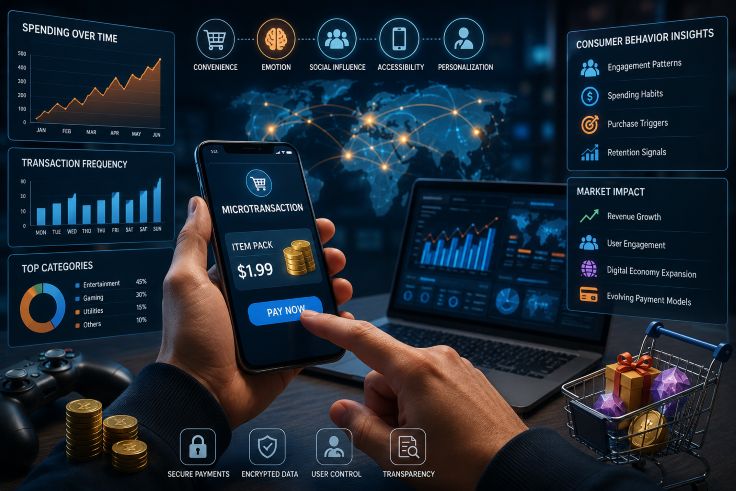
gambling and economy

1. Small Transactions Often Feel Less Significant

One of the strongest observations in behavioral spending research is that smaller payments can reduce the perceived weight of spending decisions.

Behavioral economist Richard Thaler, known for his work on mental accounting, explained that people frequently separate financial decisions into psychological categories. Smaller payments can feel easier to justify because they appear isolated rather than connected to larger cumulative totals.

Digital platforms often operate through repeated actions rather than single commitments. Small purchases spread across days or weeks may create a different perception compared with one larger payment made at once.

This behavior extends beyond gambling-related environments into streaming services, mobile applications, and online marketplaces.

2. Convenience Can Influence Spending Frequency

Convenience has become one of the strongest drivers behind digital purchasing behavior.

PwC Global Consumer Insights Survey findings suggest that reduced friction in digital transactions often increases user participation and transaction frequency. Payment methods that require fewer steps may influence how often users choose to engage with purchases.

Consumers increasingly encounter environments where transaction completion happens within seconds. Stored payment details, automated systems, and simplified verification processes reduce barriers between decision-making and action.

The result does not necessarily indicate increased spending across every user group. Instead, it shows how ease of use can alter interaction patterns.

3. Emotional Triggers Can Affect Decision Timing

Human decisions are not driven entirely by logic. Emotional states can influence spending behavior across digital environments.

Harvard Business Review has discussed how emotional responses frequently affect purchasing decisions, even in situations where consumers believe they are acting rationally.

Excitement, curiosity, urgency, and social influence can contribute to spending actions. Digital platforms frequently involve interactive experiences that naturally generate emotional engagement.

Behavioral responses become particularly visible during limited-time events, seasonal activity cycles, or highly active community periods.

Understanding these reactions does not imply manipulation in every circumstance. It simply reflects the reality that human decision-making combines both emotional and rational influences.

4. Social Environments Shape Spending Behavior

Consumer choices rarely exist in isolation.

Stanford Graduate School of Business research has explored how social environments influence purchasing behavior and perceived value.

Digital communities create spaces where users exchange opinions, discuss experiences, and react to trends together. Shared experiences can affect how individuals interpret value and participation.

Gaming ecosystems, online communities, and interactive entertainment platforms frequently demonstrate this effect.

People may not consciously copy behavior, yet repeated exposure to group activity can gradually affect decision patterns.

5. Data Patterns Help Businesses Understand Demand

Microtransaction systems generate large amounts of behavioral information.

Deloitte Digital research notes that organizations increasingly analyze transaction patterns to understand consumer preferences and changing market conditions.

Data points may include:

  • Frequency of purchases
  • Time between transactions
  • User activity periods
  • Engagement duration
  • Response to pricing structures

These observations help companies identify broad patterns rather than predict individual behavior.

As digital economies continue evolving, businesses increasingly rely on these insights to improve product development and understand consumer expectations.

6. Long-Term Economic Questions Continue Emerging

The growth of microtransaction systems raises larger economic discussions beyond individual spending choices.

Questions increasingly examined by economists include:

  • How will repeated digital spending influence long-term consumer budgeting habits?
  • Could smaller transactions gradually reshape perceptions of value?
  • How should regulators evaluate emerging digital payment systems?
  • Will future consumers develop different expectations around ownership and purchasing behavior?

World Economic Forum discussions on digital economies suggest that technology increasingly changes relationships between consumers and financial systems. Traditional purchasing models focused heavily on ownership, while many modern environments emphasize ongoing interaction and access. These transitions continue creating new areas for research.

READ ALSO: Economic Momentum Builds as Top Australian Online Casinos Redefine Player Value

Market Impact and Broader Implications

Microtransactions reveal more than spending activity inside individual platforms. They provide insight into how convenience, social interaction, emotional responses, and technology collectively shape consumer behavior.

Digital payment environments continue expanding into multiple industries, including entertainment, online services, retail systems, and financial technology sectors. Observing spending behavior within these ecosystems helps researchers understand broader economic movement.

Related account creation processes, transaction systems, and participation pathways may continue evolving as consumer expectations change.

Responsible Gambling Risk Warning: Gambling-related digital environments involve financial risk. Users should participate responsibly, understand spending limits, and avoid making decisions based on emotional pressure or impulsive behavior.

Long-term consumer trends suggest that digital spending behavior will remain an important area of economic study. While technologies and platforms will continue changing, understanding the relationship between human behavior and financial decisions remains central to evaluating future market developments.

Celebrating The Rise Of Mobile Gaming Bets As A New Chapter In Southeast Asia’s Gambling Boom

Young adult happily using smartphone in bright café reflecting modern digital gaming lifestyle.

The entertainment economy in Southeast Asia is evolving, and mobile gaming is clearly leading that evolution.

The combination of convenient and efficient mobile banking alongside smartphone accessibility and a digitally fluent population has brought previously in-person betting and casino experiences into users’ hands.

Southeast Asia’s population, particularly the younger demographic, is very comfortable with app-based mobile services, enabling a rapid evolution of the entertainment economy and leading mobile gaming bet platforms to be the primary interface for modern wagering experiences.

Mobile betting services are leading the entertainment economy’s evolution, as they are changing how the economy flows and how consumer entertainment dollars are spent.

The integration of payment options, equity mobile betting services, and games, coupled with promotions and consumer engagement, provides a streamlined and convenient solution for consumers needing to gamble digitally.

This has shifted consumer gambling activities to be a part of the larger economy, including fintech, analytics, and digital marketing.

Economic Activity Beyond Traditional Mobile Gaming Revenues

Mobile gaming, particularly wagering, has positive effects on the economy that go beyond the mobile gaming revenues generated.

The mobile gaming economy relies on new digital services for cellular telecommunications, building on a formerly existing digital ecosystem.

The services that are provided for the mobile gaming ecosystem, such as technology infrastructure, digital security, and customer service, are also reliant on new digital services.

The growth of the mobile gaming ecosystem and the economy it supports depends on all these services, both new and existing.

User experience design, data science, digital compliance, and payment processing have seen considerable growth, and the emergence of increased roles in relation to employment patterns continues to gain momentum.

With the growth of current online gambling roles, positions remain to offer competitive salaries and provide skills transfer opportunities to adjacent technology sectors.

This reinforces perceptions of online gambling as an industry of innovation rather than an industry with stagnated growth.

Structural changes in an industry affect how consumers spend their money.

Changes in consumer behavior spending through micro-transactions, loyalty systems, and real-time engagement features create repeat economic activity instead of one-time payment.

This behavior positively impacts the longevity and sustainability of a platform, especially in relation to the app economy.


ALSO READ: The Hidden Economic Momentum Behind Norway’s No Deposit Casino Culture


Catalyst of Change in the Industry

Mobile gambling applications will always have a reliance on improved technology. Cloud computing is intrinsic to peak usage, as well as consumer trust in the digital transactions through improved encryption and systems of identity verification.

Usage patterns and activity history yield personalized game experiences through artificial intelligence.

Improved entertainment comes from live-streaming functions and the interactive nature of the mobile gambling applications, as previously mentioned.

Users of mobile gambling applications are no longer passive participants but rather are empowered decision-makers in dynamic environments.

Increased engagement through interactivity draws parallels to mobile gambling applications and other forms of digital entertainment, such as online gaming and streaming.

A Region Embracing Digital Entertainment

Southeast Asia’s evolving economy sustains the region’s upward trend. Growing middle-income populations, urban migration, and cross-border trade in digital services positively impact regionally integrated digital commerce.

Improved and balanced regulations between consumer protection and industry growth create a more stable operating environment for commerce.

There is optimism regarding the evolution of this sector due to the technological restlessness of the region and, most importantly, the demand for digital interaction in the economy.

There is growing confidence in the sector as operators improve and implement self-regulating and responsible gaming measures, as well as greater transparency.

Consequently, the shift towards mobile-focused betting reflects Southeast Asia’s digital economy and showcases the region’s gaming sector.

The Value of MyEmpire Casino Reviews in Today’s Online Gambling Economy

The online casino industry has flourished over the past few years due to ease of access of mobile, digital payment, live gaming, and regulatory reforms. A huge number of possible players begin their adventure with MyEmpire casino reviews in order to make sure that a platform is reputable, entertaining, and worthy of their time and money.

What to Expect in MyEmpire Casino Reviews

Check the following:

Bonus Offers and Wagering Requirements

Good reviews will state clearly the kind of bonuses that will be given, e.g., welcome bonuses, free spins, or loyalty bonuses; the wagering requirements must be clear and reasonable.

Game Selection and Software Suppliers

The number of slot names, table games, and live-dealer opportunities should also be described by the reviewers. Software partners (e.g. well-known providers) quality is one of the primary factors in the graphics and gameplay.

Support, Speed of Payment and Terms of withdrawal

Responsiveness of customer services, payout time, ways of depositing money and concealed charges are essential issues that should be featured in MyEmpire casino reviews. These may either or may not break the experience of a user.

The MyEmpire Casino Reviews against Industry Standards

  • Licensing and Security Measures: The industry standards require strict licensing (by accepted authorities), encryption using the SSL, and the fair audit. Such aspects are often discussed as at the center of trust in multiple reviews of MyEmpire casino.
  • UX and Mobile Compatibility: A casino can be attractive on a desktop but phone and tablet responsiveness is no longer an option. Lots of reviews are complimenting those platforms that provide uninterrupted mobile experiences without compromising the fidelity of the graphics or types of games.

Economic Consumptions of Online Casino Expansion

The development of online casinos has implications to economics:

  • employment in software
  • regulation and payment processing
  • gambling tax, and licensing revenues
  • gambling addiction and mismanagement.

Reviewing MyEmpire casino allows people to make their personal decisions related to the information, and economic analysts may get to learn the general patterns in consumer behavior and regulation.

A close-up image showing a laptop displaying a detailed review of "MyEmpire Casino," with a stack of poker chips and a smartphone nearby.In case you want more background, you may be interested in the post articles about the gaming industry, like “How Gaming Industry Improve Local Region” related to you. These reading materials are complementary to MyEmpire casino reviews as it offers information about regulation, sustainability, and profitability in the gambling industry.

Conclusion

In the context of joining the field of online casino, particularly, the platforms like MyEmpire casino, it has to do with research. Check reviews, compare bonuses, check licensing, and review user experiences. MyEmpire casino reviews are the effective guide to beginners as well as experienced players, though, you should check everything yourself. By doing so, you secure your pocket, your time and have the fun that this booming business can serve.

𐌢