
Tag: Responsible Gambling

The Rise of Digital Gambling Platforms and Their Role in Poland’s Online Economy

Poland’s regulated online gambling market has expanded steadily over the past decade as internet access, digital payment systems, and mobile technology have become more widespread. Data from Statista, the Polish Ministry of Finance, and the European Gaming and Betting Association (EGBA) shows that online gambling has become an increasingly visible part of Europe’s digital economy, contributing tax revenue while reshaping how consumers access entertainment.

Supporters and critics often view this transformation through very different lenses. Industry observers point to regulated operators, technological innovation, and tax contributions as signs of economic progress, while others emphasize consumer protection and market risks. Reports and information from 22Bet, alongside regulatory publications and market research, illustrate how digital gambling platforms have become part of broader discussions about Poland’s evolving online economy rather than existing as isolated entertainment services.

Digital Economy Analysis

Economic Arguments Supporting Digital Gambling Growth

One perspective highlights the contribution of licensed online gambling businesses to economic activity. Digital operators invest in software development, cybersecurity, payment processing, customer support, compliance systems, and digital marketing. These activities generate employment opportunities across several technology-related industries instead of limiting economic value to betting transactions alone.

Research published by Deloitte has shown that regulated digital industries often create wider economic effects through technology investment and business partnerships. Gambling platforms depend on secure infrastructure, cloud computing, fraud detection, identity verification, and responsible gaming systems. These supporting services create demand for professionals in information technology, finance, legal compliance, and digital operations.

Advocates also argue that regulated online gambling keeps consumer spending within licensed environments where governments can monitor activity more effectively. Compared with unregulated websites operating outside national oversight, licensed platforms are generally required to follow local tax rules, consumer verification standards, and anti-money laundering regulations.

The Importance of Tax Revenue

Tax generation remains one of the strongest arguments supporting regulated online gambling markets. Governments collect revenue through licensing fees, corporate taxation, and gambling-related taxes that may contribute to public spending.

According to the Polish Ministry of Finance, gambling regulations aim to balance consumer access with public oversight while reducing illegal market activity. Tax income generated from regulated operators becomes part of broader government revenue rather than remaining outside the formal economy.

Supporters argue that these funds can help finance public services, infrastructure projects, healthcare initiatives, education programs, and regulatory enforcement. Although gambling taxes represent only one component of government income, they demonstrate how digital entertainment businesses can participate in the formal economy.

This broader online casino sector also contributes through employment, supplier contracts, technology procurement, and financial services that extend beyond direct gambling activity.

Changing Consumer Spending Patterns

Consumer behavior has evolved alongside digital commerce. Mobile applications, electronic wallets, and faster payment systems have encouraged people to complete more financial transactions online, including regulated entertainment services.

Studies from McKinsey & Company indicate that consumers across Europe increasingly expect seamless digital experiences in banking, retail, travel, and entertainment. Gambling platforms have followed similar technological trends by emphasizing mobile accessibility, identity verification, and secure payment infrastructure.

Some economists suggest that regulated digital gambling simply reflects wider changes in consumer preferences rather than creating entirely new spending habits. Others disagree, arguing that constant online availability may increase participation compared with traditional physical venues.

This disagreement illustrates why discussions about digital gambling rarely produce simple conclusions. Consumer behavior is influenced by technology, income, regulation, entertainment preferences, and broader economic conditions.

Criticism of Market Expansion

Critics question whether economic benefits adequately offset potential social costs. One concern involves responsible gambling and the possibility that easier online access may increase risks for individuals who struggle to control their gambling behavior.

The World Health Organization (WHO) and various public health organizations recognize gambling-related harm as an issue that requires prevention, education, and support services. Although most participants gamble without developing serious problems, a smaller group may experience financial stress, relationship difficulties, or mental health challenges.

Critics also argue that digital platforms can create environments where gambling becomes more convenient than ever before. Mobile devices operate throughout the day, making participation possible from nearly any location with internet access.

These concerns have encouraged regulators across Europe to strengthen identity verification requirements, advertising standards, deposit controls, self-exclusion programs, and monitoring systems designed to reduce gambling-related harm.

Questions About Market Concentration

Another issue involves market concentration. Large international operators often possess greater financial resources, stronger technology platforms, and more recognizable brands than smaller competitors.

Some analysts believe this concentration may reduce competition over time if a limited number of companies dominate the market. Smaller businesses may struggle to match investments in cybersecurity, software development, customer support, regulatory compliance, and marketing.

On the other hand, larger operators frequently have greater capacity to invest in security technologies, fraud prevention, responsible gambling tools, and regulatory compliance. Supporters argue that scale can improve consumer protection when combined with effective government oversight.

The debate therefore extends beyond simple questions of market size. It examines whether competition, innovation, and consumer protection remain balanced as the industry continues to mature.

Finding a Sustainable Balance

The most constructive approach may lie between unrestricted expansion and excessive restriction. Effective regulation attempts to preserve legitimate economic activity while minimizing risks for consumers.

European regulators increasingly emphasize transparency, age verification, anti-money laundering controls, responsible advertising standards, and consumer education. Industry organizations such as the European Gaming and Betting Association have likewise promoted responsible gambling initiatives and data reporting among participating operators.

These measures suggest that long-term sustainability depends less on rapid growth and more on maintaining public confidence. Economic success becomes difficult to sustain if consumer protection is perceived as insufficient. This balanced approach reflects the complex relationship between gambling and the economy, where financial contributions, regulation, and social responsibility must all be considered when shaping future policy.

Conclusion

Digital gambling platforms have become an established part of Poland’s online economy, contributing to technology investment, tax generation, and digital employment while also raising legitimate questions about consumer welfare and market concentration. Both supporters and critics present credible arguments supported by economic data, regulatory experience, and public health research.

The future of Poland’s regulated gambling industry will likely depend on maintaining an appropriate balance between innovation, competition, effective oversight, and responsible participation. As the broader digital betting market continues to evolve, policymakers, operators, researchers, and consumers all have important roles in shaping an environment that supports economic development while recognizing potential risks.

Responsible gambling warning: Gambling involves financial risk and may not be suitable for everyone. Individuals should participate only within their financial limits, remain aware of the time and money they spend, and seek assistance from qualified support organizations if gambling begins to negatively affect their finances, relationships, or well-being.

The Economic Impact of Risky Online Betting Platforms in Brazil

Brazilians spent over R$68 billion on online betting in the year leading up to mid-2024. This massive figure shows how quickly the sector has grown. Yet much of this money flowed to overseas platforms with little oversight. Now, with regulation in place since January 2025, the country faces a key choice: stick to safe options or risk unregulated sites.

The rise of online gambling has changed spending habits across Brazil. Many players turn to virtual casino games for quick entertainment. These platforms offer slots, roulette, and poker from home. However, poorly rated or unregulated sites often lead to problems. Players face delayed payouts, unfair games, or even total loss of funds when sites disappear.

How Unregulated Platforms Drain the Economy
regulated and unregulated platforms

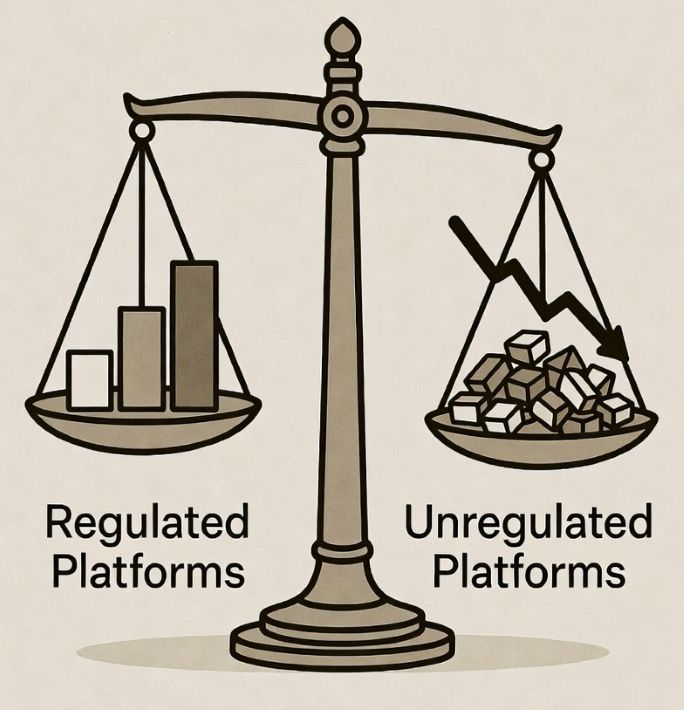
Unregulated platforms hurt more than individual wallets. They drain money from the local economy. Funds sent abroad do not create jobs here or pay taxes.

In contrast, licensed operators contribute to government revenue. By late 2025, over 80 companies hold federal licenses. They pay fees and taxes that support public services. Experts estimate the regulated market could generate billions in annual taxes. This money funds health, education, and infrastructure.

Building Consumer Trust

Risky sites erode trust in the entire industry. When players lose money to scams, they grow wary of all betting. This slows growth in the legal sector.

Regulated platforms must follow strict rules. They use certified games, secure payments, and tools for responsible play. Features like deposit limits and self-exclusion help prevent addiction.

Shifting Money Flow

Money flow shifts dramatically with regulation. Before 2025, much spending left Brazil. Now, licensed sites keep more funds circulating locally.

They partner with banks and payment systems under oversight. This reduces risks like money laundering. It also boosts related industries, such as tech and advertising, creating thousands of jobs.

Threats to Market Stability

Unregulated betting threatens stability. Illegal operators hold 40-50% of the market even after regulation. They offer better odds or fewer checks to attract players. But this undercuts legal sites.

It leads to lost tax revenue, estimated at R$10 billion yearly. Authorities have blocked thousands of illegal domains. Still, new ones appear.

Benefits of Regulation

On the positive side, regulation promotes stability. Licensed platforms invest long-term. They sponsor sports and follow advertising rules. This builds a sustainable industry.

Studies show regulated markets protect vulnerable players better. They channel funds into the economy instead of offshore accounts.

Wider Economic Effects

Excessive gambling can reduce consumer spending elsewhere. Some reports link the betting boom to slower retail growth. Families divert money from essentials to bets. This hits small businesses.

Regulated sites counter this with responsible tools. They alert players to risky behavior and limit losses.

Choosing safe platforms matters for everyone. Licensed options ensure fair play and quick withdrawals. They support Brazil’s growth through taxes and jobs.

READ ALSO: The Role of Online Gambling in Driving Growth, Innovation, and Financial Stability in the Digital Age

Conclusion

In the end, risky online betting platforms harm Brazil’s economy in many ways. They reduce trust, send money abroad, and destabilize the market. Safer, regulated gambling changes that. It keeps funds local, generates revenue, and protects players. As the sector matures, opting for licensed virtual casino games benefits individuals and the nation. A strong, regulated market leads to lasting economic gains.

Gambling and Economy: How Non-UK Casinos Boost Local Economies

Casinos have long been recognized as significant contributors to the economy. Their impact is especially notable in countries where the gambling industry thrives, such as Monaco, Macau, and Malta. These locations have transformed into bustling hubs of entertainment, attracting millions of visitors annually and generating substantial economic activity. By understanding the economic influence of non-UK casinos, we can appreciate their role in fostering local growth and development.

Many non UK casinos accepting UK players have become key drivers of economic progress in their host countries. Explore the economic benefits non-UK casinos bring to their host countries. Understand the financial ripple effects of gambling industries on local economies.

Case Studies of Thriving Casino Industries

Monaco

Monaco is renowned for its luxurious casinos, particularly the iconic Casino de Monte-Carlo. This small principality on the French Riviera has leveraged its casino industry to achieve significant economic success.

  • Economic Impact: The casino industry in Monaco is a major source of revenue, contributing to the country’s GDP and public finances.
  • Employment: Casinos in Monaco employ thousands of people, ranging from croupiers to hospitality staff, thereby reducing unemployment rates.
  • Tourism: Monaco’s casinos attract high-net-worth individuals and tourists from around the globe, boosting the local tourism sector.

Macau

Macau, often referred to as the “Gambling Capital of the World,” surpasses even Las Vegas in terms of gambling revenue. The Venetian Macau stands as a testament to the grandeur and profitability of Macau’s casino industry.

  • Economic Contribution: The casino industry in Macau is a cornerstone of its economy, accounting for a significant portion of the region’s GDP.
  • Job Creation: Macau’s casinos provide employment opportunities for tens of thousands of residents, from dealers to managerial positions.
  • Tourism and Infrastructure: The influx of tourists has led to the development of robust infrastructure, including hotels, restaurants, and entertainment facilities.

Malta

Malta has emerged as a prominent hub for online gambling, hosting numerous licensed online casinos. Its strategic location and favorable regulatory environment have made it an attractive destination for the gambling industry.

  • Revenue Generation: The gambling sector, including online casinos, is a vital contributor to Malta’s economy, generating substantial revenue.
  • Employment Opportunities: The industry supports a wide range of jobs, from IT and customer support to marketing and management.
  • Investment in Technology: Malta’s focus on online gambling has spurred investment in technology and innovation, further strengthening its economy.

Analysis of Employment, Tourism, and Tax Revenue

Employment

Casinos are significant employers in their host countries. They offer a variety of jobs, contributing to lower unemployment rates and providing stable incomes for many families.

  • Diverse Job Roles: Casinos employ individuals in various roles, including gaming operations, hospitality, security, and administration.
  • Training and Development: Many casinos invest in training programs to develop the skills of their employees, enhancing their career prospects.
  • Economic Stability: Stable employment in the casino industry helps boost consumer spending and supports local businesses.

Tourism

The presence of casinos often leads to a surge in tourism, as they become major attractions for both domestic and international visitors.

  • Tourist Attractions: Casinos are often part of larger entertainment complexes, offering hotels, restaurants, and shows that attract tourists.
  • Economic Boost: Increased tourism leads to higher spending in local businesses, such as shops, restaurants, and transportation services.
  • Cultural Exchange: The influx of tourists promotes cultural exchange and enhances the global image of the host country.

Tax Revenue

Casinos contribute significantly to the public coffers through taxes and licensing fees. These funds are essential for the development and maintenance of public services and infrastructure.

  • Tax Contributions: Casinos are subject to various taxes, including corporate, gaming, and licensing fees, which contribute to government revenue.
  • Public Services Funding: The tax revenue generated from casinos is often used to fund public services, such as healthcare, education, and infrastructure projects.
  • Economic Development: Investment in public services and infrastructure fosters long-term economic development and improves the quality of life for residents.

READ ALSO: Gambling As Entertainment: How To Play Safe

Profiles of Leading Casinos in Thriving Regions

Casino de Monte-Carlo, Monaco

  • History and Prestige: Established in 1863, the Casino de Monte-Carlo is one of the world’s most famous gambling establishments, known for its opulent architecture and high-stakes gaming.
  • Economic Impact: It plays a vital role in Monaco’s economy, attracting wealthy tourists and generating significant revenue through gaming and associated services.
  • Cultural Significance: The casino is not only a gambling destination but also a cultural icon, hosting various events and performances that enhance Monaco’s cultural landscape.

The Venetian Macau

  • Scale and Luxury: The Venetian Macau is one of the largest casinos in the world, offering an extensive range of gaming options, luxury accommodations, and entertainment facilities.
  • Tourist Attraction: Its grandeur and variety of offerings make it a top attraction for tourists, contributing to Macau’s status as a global gambling hub.
  • Economic Contribution: The casino’s success has spurred further development in Macau, leading to improved infrastructure and increased investment in the region.

Discussion on Responsible Gambling Measures

Promoting Responsible Gambling

Responsible gambling measures are crucial in mitigating the negative effects of gambling and ensuring the industry’s sustainability.

  • Regulations and Compliance: Non-UK casinos often adhere to strict regulations to promote responsible gambling, including setting limits on betting amounts and providing resources for problem gamblers.
  • Public Awareness Campaigns: Casinos invest in public awareness campaigns to educate players about the risks of gambling and the importance of playing responsibly.
  • Support Services: Many casinos offer support services, such as helplines and counseling, to assist individuals who may develop gambling problems.

Economic Implications

Implementing responsible gambling measures can have positive economic implications by fostering a sustainable and ethical gambling environment.

  • Sustainable Growth: By promoting responsible gambling, casinos can ensure long-term growth and stability, benefiting the local economy.
  • Reputation Management: Casinos that prioritize responsible gambling enhance their reputation, attracting more customers and investors.
  • Community Support: Responsible gambling initiatives demonstrate a casino’s commitment to the well-being of the community, fostering trust and goodwill.

Conclusion

Non-UK casinos play a pivotal role in boosting local economies through job creation, tourism, and tax revenue. By examining the successful examples of Monaco, Macau, and Malta, we can appreciate the substantial economic benefits these casinos bring to their host countries. Furthermore, the implementation of responsible gambling measures ensures the industry’s sustainability and positive impact on society. As the global gambling landscape continues to evolve, the contributions of non-UK casinos will remain a vital component of economic growth and development.

𐌢