
Month: May 2026

Microtransactions and Behavioral Spending: What Digital Platforms Reveal About Consumer Trends

McKinsey & Company has reported that digital consumer behavior increasingly reflects a shift toward smaller and more frequent transactions rather than larger one-time purchases. Across gaming platforms, subscription services, and interactive digital systems, researchers have observed how payment behavior often develops through repeated low-cost actions that gradually shape broader spending habits.

Digital environments also create opportunities to observe how users interact with payment systems and account structures. Sources that explain onboarding flows, such as step by step registration processes, can illustrate how platforms structure entry points and user interactions. While individual systems differ, these processes reveal how access design and transaction pathways can influence consumer engagement patterns over time.

Microtransactions have become a useful lens for examining broader economic behavior. Small purchases may appear insignificant individually, yet collective spending patterns reveal meaningful trends about decision-making, convenience, emotional responses, and market adaptation. Looking closely at these patterns helps explain larger shifts in digital economies.
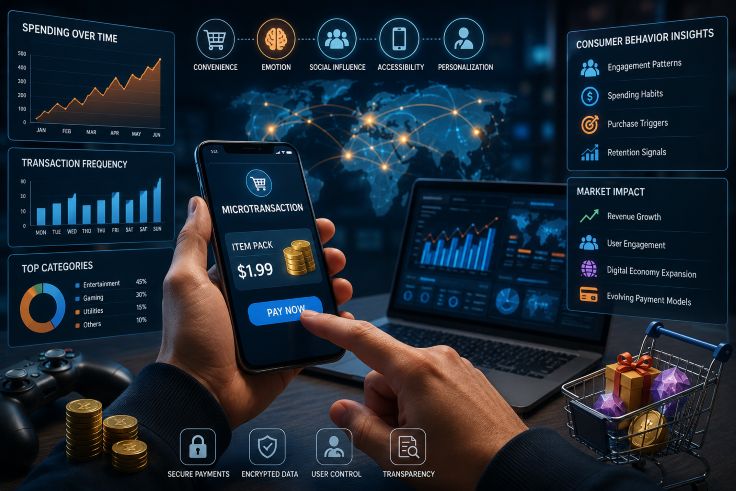
gambling and economy

1. Small Transactions Often Feel Less Significant

One of the strongest observations in behavioral spending research is that smaller payments can reduce the perceived weight of spending decisions.

Behavioral economist Richard Thaler, known for his work on mental accounting, explained that people frequently separate financial decisions into psychological categories. Smaller payments can feel easier to justify because they appear isolated rather than connected to larger cumulative totals.

Digital platforms often operate through repeated actions rather than single commitments. Small purchases spread across days or weeks may create a different perception compared with one larger payment made at once.

This behavior extends beyond gambling-related environments into streaming services, mobile applications, and online marketplaces.

2. Convenience Can Influence Spending Frequency

Convenience has become one of the strongest drivers behind digital purchasing behavior.

PwC Global Consumer Insights Survey findings suggest that reduced friction in digital transactions often increases user participation and transaction frequency. Payment methods that require fewer steps may influence how often users choose to engage with purchases.

Consumers increasingly encounter environments where transaction completion happens within seconds. Stored payment details, automated systems, and simplified verification processes reduce barriers between decision-making and action.

The result does not necessarily indicate increased spending across every user group. Instead, it shows how ease of use can alter interaction patterns.

3. Emotional Triggers Can Affect Decision Timing

Human decisions are not driven entirely by logic. Emotional states can influence spending behavior across digital environments.

Harvard Business Review has discussed how emotional responses frequently affect purchasing decisions, even in situations where consumers believe they are acting rationally.

Excitement, curiosity, urgency, and social influence can contribute to spending actions. Digital platforms frequently involve interactive experiences that naturally generate emotional engagement.

Behavioral responses become particularly visible during limited-time events, seasonal activity cycles, or highly active community periods.

Understanding these reactions does not imply manipulation in every circumstance. It simply reflects the reality that human decision-making combines both emotional and rational influences.

4. Social Environments Shape Spending Behavior

Consumer choices rarely exist in isolation.

Stanford Graduate School of Business research has explored how social environments influence purchasing behavior and perceived value.

Digital communities create spaces where users exchange opinions, discuss experiences, and react to trends together. Shared experiences can affect how individuals interpret value and participation.

Gaming ecosystems, online communities, and interactive entertainment platforms frequently demonstrate this effect.

People may not consciously copy behavior, yet repeated exposure to group activity can gradually affect decision patterns.

5. Data Patterns Help Businesses Understand Demand

Microtransaction systems generate large amounts of behavioral information.

Deloitte Digital research notes that organizations increasingly analyze transaction patterns to understand consumer preferences and changing market conditions.

Data points may include:

  • Frequency of purchases
  • Time between transactions
  • User activity periods
  • Engagement duration
  • Response to pricing structures

These observations help companies identify broad patterns rather than predict individual behavior.

As digital economies continue evolving, businesses increasingly rely on these insights to improve product development and understand consumer expectations.

6. Long-Term Economic Questions Continue Emerging

The growth of microtransaction systems raises larger economic discussions beyond individual spending choices.

Questions increasingly examined by economists include:

  • How will repeated digital spending influence long-term consumer budgeting habits?
  • Could smaller transactions gradually reshape perceptions of value?
  • How should regulators evaluate emerging digital payment systems?
  • Will future consumers develop different expectations around ownership and purchasing behavior?

World Economic Forum discussions on digital economies suggest that technology increasingly changes relationships between consumers and financial systems. Traditional purchasing models focused heavily on ownership, while many modern environments emphasize ongoing interaction and access. These transitions continue creating new areas for research.

READ ALSO: Economic Momentum Builds as Top Australian Online Casinos Redefine Player Value

Market Impact and Broader Implications

Microtransactions reveal more than spending activity inside individual platforms. They provide insight into how convenience, social interaction, emotional responses, and technology collectively shape consumer behavior.

Digital payment environments continue expanding into multiple industries, including entertainment, online services, retail systems, and financial technology sectors. Observing spending behavior within these ecosystems helps researchers understand broader economic movement.

Related account creation processes, transaction systems, and participation pathways may continue evolving as consumer expectations change.

Responsible Gambling Risk Warning: Gambling-related digital environments involve financial risk. Users should participate responsibly, understand spending limits, and avoid making decisions based on emotional pressure or impulsive behavior.

Long-term consumer trends suggest that digital spending behavior will remain an important area of economic study. While technologies and platforms will continue changing, understanding the relationship between human behavior and financial decisions remains central to evaluating future market developments.


Flexible Payment Systems Around Non UK Casino Sites Drive Fresh Momentum Across Digital Gambling Economies

Young UK casino enthusiast uses seamless digital payments while relaxing inside bright modern café.

A café owner in Manchester recently joked that younger customers now spend more time discussing payment apps and crypto transfers than football scores.

It sounded funny at first, but there’s probably more truth to it than people realize.

Payment technology is evolving quickly, and conversations around non UK casino sites are becoming tied to broader discussions about the changing digital entertainment economy.

Not long ago, many observers assumed niche online gambling markets would remain relatively small. Instead, these platforms have steadily adapted to mainstream consumer expectations.

To stay competitive, gambling services now need to offer secure payment methods, smoother identity verification, and faster processing systems similar to what users already experience on shopping and streaming platforms.

The Speed of Payment Systems Is Becoming the Main Attraction

For years, online gamblers simply accepted slow withdrawal systems as part of the experience. Waiting days to access winnings was considered normal. That attitude has gradually changed.

The rise of digital wallets, mobile banking, and alternative payment solutions has reshaped customer expectations. Users now compare gambling platforms the same way they compare food delivery or subscription apps.

If a transaction feels slow or inconvenient, people notice immediately.

At the same time, platforms face an unusual challenge. Consumers now have more payment options than ever, but no single platform can support every method equally well.

This growing variety has created a strange balance between convenience and fragmentation.

People working in finance and technology have also noticed that gambling platforms often adopt payment innovations surprisingly early.

Some of the discussions happening around younger consumers and digital spending habits closely resemble trends that first gained traction in gaming spaces years ago.

A More Flexible Gambling Economy

Flexible payment systems have helped create a more international gambling environment. Traditional banking limitations, including lengthy delays and region-specific restrictions, no longer carry the same weight they once did.

Economists following digital gaming trends have pointed out that payment flexibility often strengthens entire online communities.

Digital workers and remote freelancers already move between currencies and platforms regularly, so gambling systems built around flexibility naturally appeal to those habits.

Some analysts have also observed that gaming companies are increasingly borrowing ideas from subscription-based businesses.

Convenience now plays a major role in customer loyalty. Many users are willing to pay extra if the experience feels smoother and less stressful.

As payment providers expand their services, gaming platforms gain access to wider audiences. That relationship encourages faster improvements in infrastructure and user experience across the industry.

Trust and Convenience Now Go Together

Many experts believe modern payment systems influence customer trust more than flashy marketing campaigns do. Gamblers have become more selective about what keeps them loyal to a platform.

Fast withdrawals and transparent transactions often matter more than bonus offers now, which wasn’t always true in the past.

Real-time transaction tracking has also encouraged platforms to simplify their payment dashboards and make the process easier to understand. Positive experiences tend to stick with users longer than promotions do.

Analysts expect many of these developments to extend beyond gambling into industries like esports, subscription streaming, and virtual marketplaces.

Gambling technology continues adapting quickly to consumer preferences, especially when it comes to payments and convenience.

Of course, discussions around regulation, responsible gambling, and sustainability still remain unavoidable.

Concerns connected to the rise in online gambling and the UK Gambling Commission continue appearing alongside conversations about innovation and accessibility.

Even so, demand for faster and simpler financial systems keeps pushing the industry forward.

The gambling economy increasingly reflects modern consumer expectations, and in some ways, it may be evolving faster than many other digital industries.

Economic Momentum Builds as Top Australian Online Casinos Redefine Player Value

Two women discuss digital gaming trends during bright afternoon café conversation together.

The conversation around digital wagering is evolving faster than expected. Interest in top Australian online casinos is no longer driven purely by entertainment.

For many, it now connects to broader economic activity tied to technology, finance, and cross-border transactions. What once felt like a niche corner of the internet is steadily becoming part of a larger digital economy.

A New Kind of Player Economy

Players participate, engage, and influence how platforms evolve, but the distribution of value is not always balanced. While large wins attract attention, the more consistent financial gains still tend to favor operators.

This creates a dynamic where users contribute heavily to the ecosystem, yet only capture a portion of its economic value. Still, their behavior shapes platform decisions more than ever before.

Technology Driving Financial Flow

Advancements in crypto and digital wallets have addressed many of the friction points that once slowed down online gambling.

Transactions are faster, more transparent, and easier to access across regions. This has allowed platforms to operate within a more fluid financial environment, where speed and convenience play a major role in user retention.

At the same time, user experience has become a central focus. Interfaces are cleaner, navigation is smoother, and personalization is no longer optional.

As one developer shared, “If it feels slow, players leave. If it feels smooth, they explore.” That mindset now defines how platforms compete.

Regulation in Competition

As offshore platforms continue to grow, questions around regulation become more complex. In many cases, competition itself pushes operators toward self-regulation.

A single negative experience can quickly spread across forums and communities, forcing platforms to respond and improve.

This creates an ongoing tension between freedom and oversight. While strict regulation is not always present, user expectations act as a form of pressure.

Over time, this balance shapes how platforms operate and how trust is built within the ecosystem.

Looking Back and Ahead

During a recent discussion, someone asked me, “What are the advantages of online casinos?” The obvious answers were convenience and variety, but the deeper realization came later.

Control has shifted. Players now decide how, when, and where they engage.

That sense of control is redefining value. It is no longer dictated solely by operators but influenced by the broader community. Users expect more, and they are quick to leave if those expectations are not met.

This space is no longer just about gaming. It reflects a growing digital economy that is learning, adapting, and responding to the people who drive it forward.

𐌢